HST Overview and Status
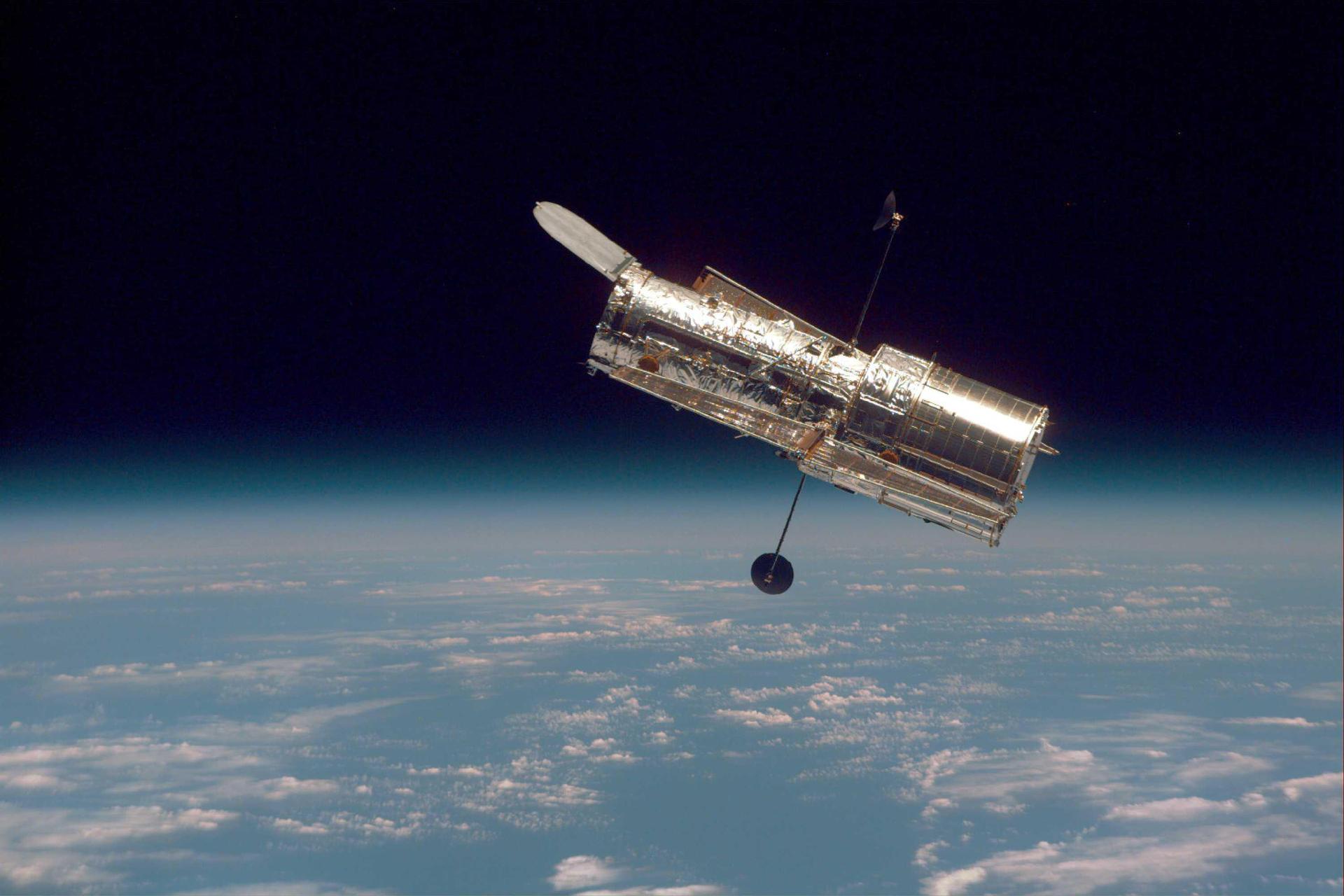
Hubble Overview
The Hubble Space Telescope (HST) was launched April 24, 1990 (36 years in operations) as a partnership between the National Aeronautics and Space Administration (NASA) and the European Space Agency (ESA). There have been multiple servicing missions, with the most recent (Servicing Mission 4) in 2009. Hubble has four scientific instruments in operation (ACS, COS, STIS, WFC3; Figure 1) and three fine guidance sensors (FGS), primarily used for pointing control, but also available for astrometry. The scientific instruments provide the following capabilities:
- Advanced Camera for Surveys (ACS, installed 2002) provides imaging and prism spectroscopy at λ~115-1100 nm. It also provides spectro-polarimetry at λ~370-1100 nm.
- Cosmic Origins Spectrograph (COS, installed 2009) provides spectroscopy at R = 3000-20,000 at λ~90-300 nm, and imaging at λ~170-300 nm.
- Space Telescope Imaging Spectrograph (STIS, installed 1997) provides spectroscopy at R = 1000-100,000 and imaging at λ~115-1030 nm. It also provides Coronagraphy at λ~200-1030 nm.
- Wide Field Camera 3 (WFC3, installed 2009) provides imaging and grism spectroscopy at λ~200-1700 nm.
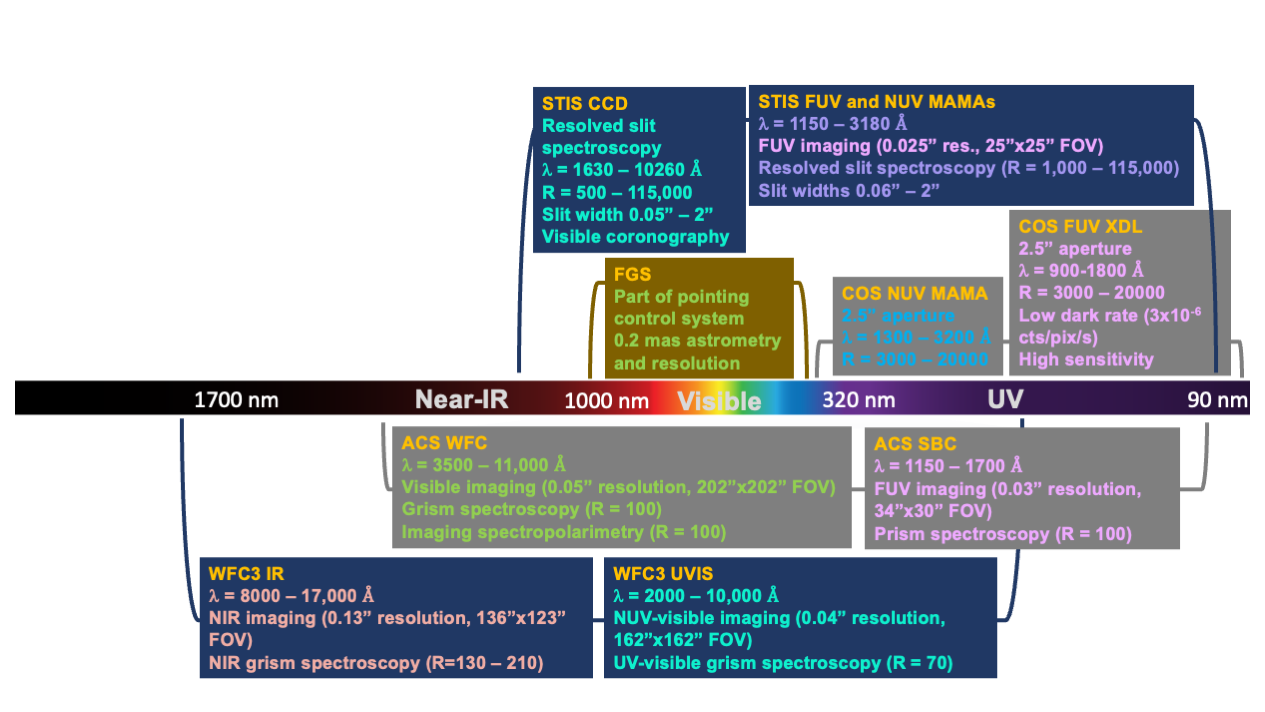
Figure 1: Hubble instrument capabilities
Hubble's Unique Capabilities
Hubble is the only high-resolution (spatial and spectral), high sensitivity ultraviolet (UV) spectroscopy and imaging facility available until the Habitable Worlds Observatory (HWO) becomes operational. NASA's UVEX, planned for a 2030 launch, will provide high sensitivity UV observations, albeit at intermediate spectral and spatial resolution. Canadian Space Agency-led CASTOR, if approved, will provide high spatial resolution near UV imaging capability, albeit at lower sensitivity. The Lazuli Space Observatory led by Schmidt Sciences will not operate in the UV.
Hubble is the only high spectral resolution UV rapid-response facility capable of characterizing high energy transients, in this decade and the next. A deluge of transient follow-up requests is expected as all-sky and multi-messenger surveys become available (Rubin, Roman, gravitational wave and neutrino facilities). The Israeli Space Agency-led ULTRASAT mission is anticipated to provide wide-field low-resolution NUV imaging of transients from late 2027, while NASA's UVEX, will provide rapid low-resolution spectroscopy of energetic transients.
Hubble’s long time baseline of high-precision observations enables impactful new science (e..g, discovery of an intermediate mass black hole, mapping of dark matter using the motions of stars, weather and seasons on gas giants).
Technical Status
Hubble currently operates at an altitude of 480 km with a predicted atmospheric re-entry date of mid-2033. The observatory, its instruments, and sub-systems have redundancy and a high probability of remaining operational through the early 2030s. The observation success rate is typically ~90%. A breakdown of the subsystems shows
- All instruments are operational and have a 90% probability of remaining operational through 2030. Two of the four instruments (COS and WFC3) have dual side electronics available. The lifetime extension efforts on COS ensure that the instrument provides sensitive FUV and NUV spectroscopy through the 2030s.
- Hubble has two functioning enhanced gyroscopes. Only 1 is needed to operate with excellent pointing stability. Currently, gyro-6 is used in the pointing control loop and gyro-4 is powered on as back-up. The probability of having at least 1 gyro in 2030 is 90%.
- Hubble has 3 functioning fine-guidance sensors (FGS). At least 2 FGSs are preferred for normal operations. The probability of having at least 2 FGSs in 2030 is 90%.
- Hubble has 4 functioning reaction wheels. At least 3 reaction wheels are required to operate. The probability of having at least 3 reaction wheels in 2030 is 95%.
- The redundancy in the electronics of the science instrument command & data handler (SI C&DH), for which side B failed in 2021, will be restored by mid 2026. With B-side operations available if needed, the reliability of the SI C&DH in 2030 is 82%.
Hubble transitioned to reduced gyro mode (RGM) in June 2024:
- The instantaneous field-of-regard in RGM is decreased from 82% to ~50% of the sky (similar to JWST's, Figure 2). The entire sky (except for the Sun and Moon) is visible over the course of a year.
- RGM incurs a small decrease in observing efficiency, but performance is significantly better than anticipated (~50-55% scheduling efficiency in RGM vs 53-58% in 3-gyro mode). On average, 83 orbits are scheduled each week in RGM, compared to 84 orbits in 3-gyro mode.
- The pointing stability and performance is unchanged from 3-gyro mode (a single gyro has been used for science exposures since 2021). RGM does not affect the precision of exoplanet transits.
- There have been no safe-mode anomalies since June 2024.
Figure 2: Simulations of the HST instantaneous filed of regard (FoR) showing an example FoR for a year.
Scientific Program
Hubble is a general-purpose astrophysical observatory capable of supporting a wide range of planetary and astrophysical science programs. Figure 3 shows the shows the distribution of research topics among peer-reviewed papers in 2024 and Figure 4 shows the same for programs selected for execution in Cycle 33.
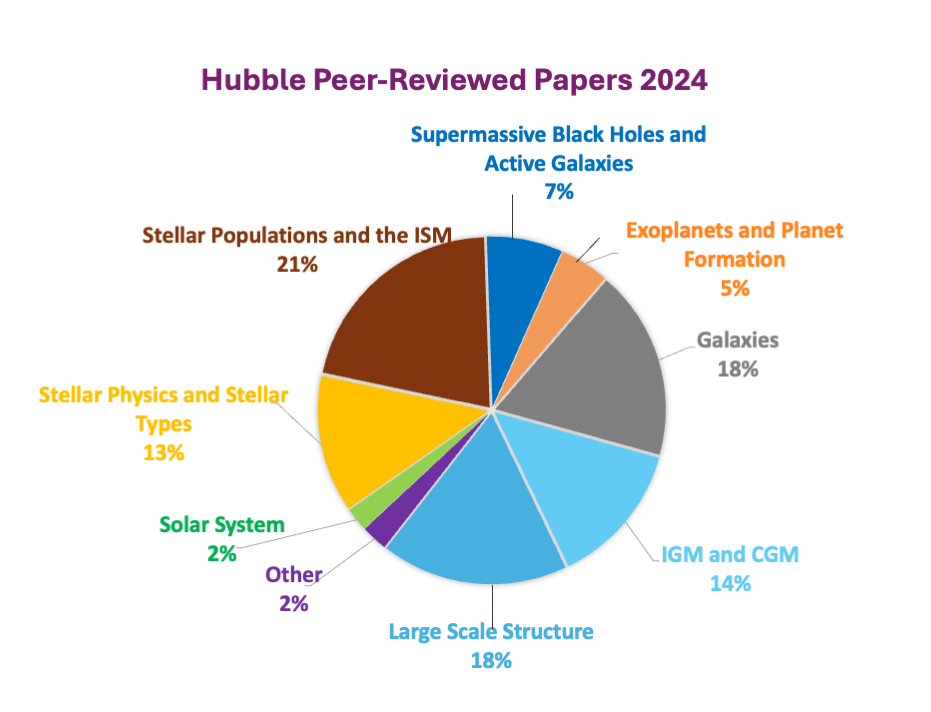
Figure 3: Hubble peer-reviewed publications in 2024 by science category
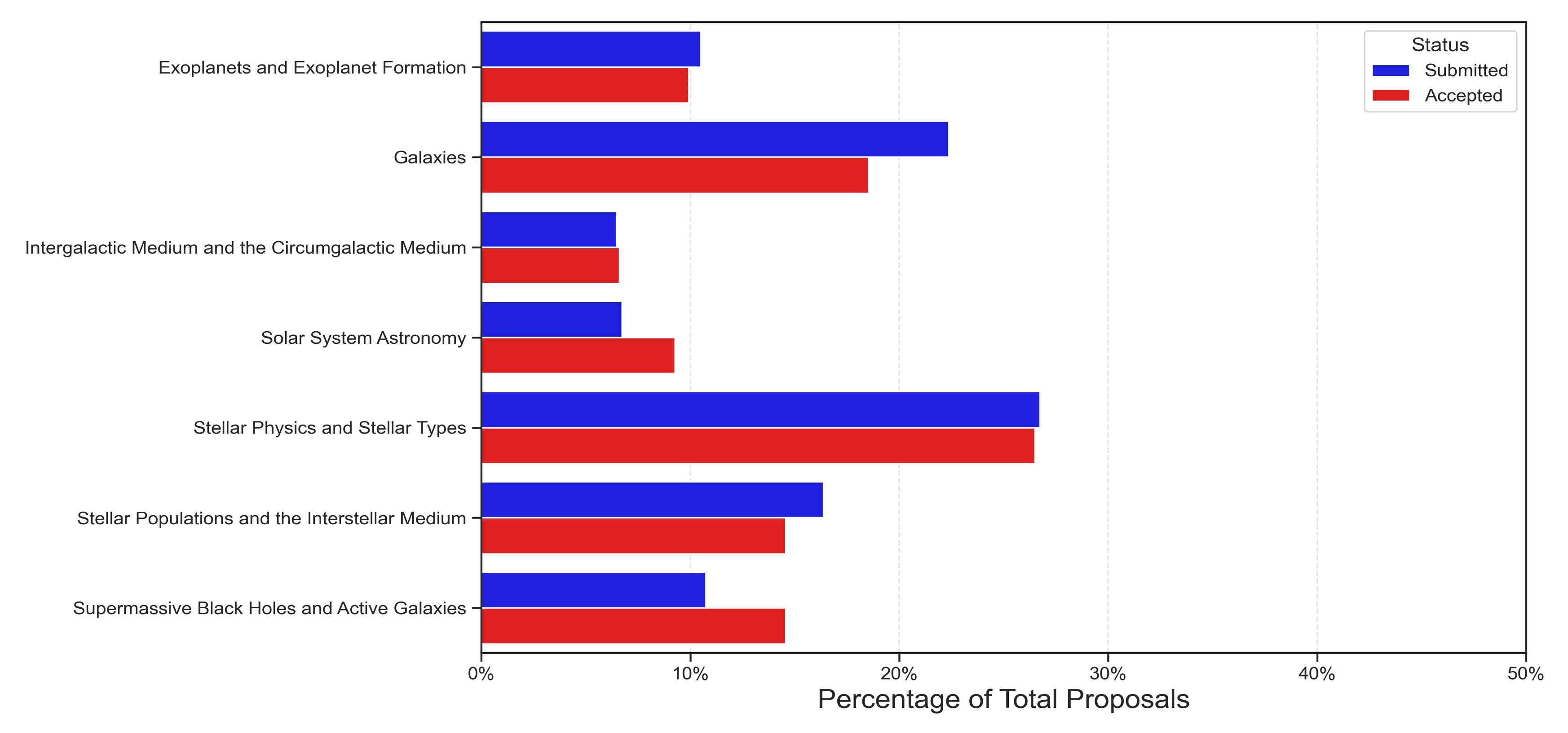
Figure 4: Programmatic selection from the Cycle 33 review process
Scientific Productivity
- Hubble continues to have a ~6:1 over-subscription (the second highest of all NASA Astrophysics missions behind JWST).
- Outstanding yearly peer-reviewed publications (>1000/yr), with 23,000+ papers and 1.3+ million citations to date (Figure 5).
- Hubble observes during more than 4000 orbits per year for a total of 1.7+ million observations to date.
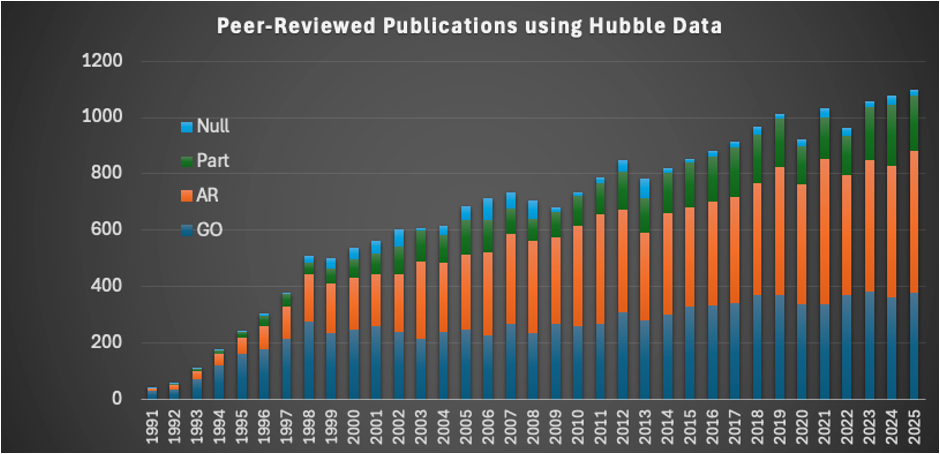
Figure 5: Peer-reviewed publications making use of Hubble data through 2025
Key Scientific Initiatives
Since launch, Hubble has led and/or contributed to multiple large-scale research initiatives spanning a broad range of scientific topics, including:
- The Hubble Deep Field Director’s Discretionary Program, 1995
- The Hubble Ultra-Deep Field Director’s Discretionary Program, 2003
- The Panchromatic Hubble Andromeda Treasury (PHAT) Multi-cycle Treasury Program, 2011-2013
- The Cosmic Assemby Near-infrared Deep Extragalactic Legacy Survey (CANDELS) Multi-cycle Treasury Program, 2011-2013
- The Cluster Lensing and Supernova Survey with Hubble (CLASH) Multi-cycle Treasury Program, 2011-2013
- The Frontier Fields Director’s Discretionary Program, 2013-2016
- The Outer Planets Atmospheres Legacy (OPAL) Director’s Discretionary Program, 2014-present
- The UV Legacy Library of Young Stars as Essential Standards (ULLYSES) Director’s Discretionary Program, 2019-2023
- The Rocky Worlds HST/JWST Director’s Discretionary Program, 2025-2028
- The Survey of Transiting Exoplanets in Lyman Alpha (STELa) Multi-cycle Treasury Program, 2025-2028
- The COSMOS Legacy UV-Optical Treasury Campaign with Hubble Multi-cycle Treasury Program, 2025-2028
Observing Opportunities
Cycle 33 (started November 1, 2025)
- 2700 orbits available; 833 submissions for 18516 orbits (7:1 oversubscription in orbits; 6:1 in proposals).
- Two new initiatives: Roman preparatory science and long-term monitoring.
- $12M in grant funding.
Cycle 34 (will start November 1, 2026)
- Cycle 34 call for proposals released on December 12, 2025 — Phase I deadline on April 16, 2026.
- ACS/WFC and WFC3/IR remain available, but may be offered as shared risk with no user support pending FY27 budgetary guidance from NASA.
- Archival Legacy programs are not offered in Cycle 34.
- Includes HST-Roman Science Initiative to stimulate community interest in HST programs enhancing Roman science.
- Includes HWO precursor science initiative to initiate investigations with Hubble that will support HWO science planning and inform mission architectures and trades, with the goal of reducing HWO’s future design and development cost and risk.
Hubble Budget
As seen in Figure 6, Hubble’s budget covers:
- Mission operations at Goddard Space Flight Center (GSFC);
- Science operations at Space Telescope Science Institute (STScI), which includes science solicitation and selection; user support; planning, scheduling, and commanding; data processing & calibration; data archiving & analysis tools; and administration of grants;
- Public outreach at STScI and GSFC;
- Grants for supporting research and Hubble science by the community; and
- The NASA Hubble fellowship program (NHFP), which supports Hubble, Einstein, and Sagan fellows.
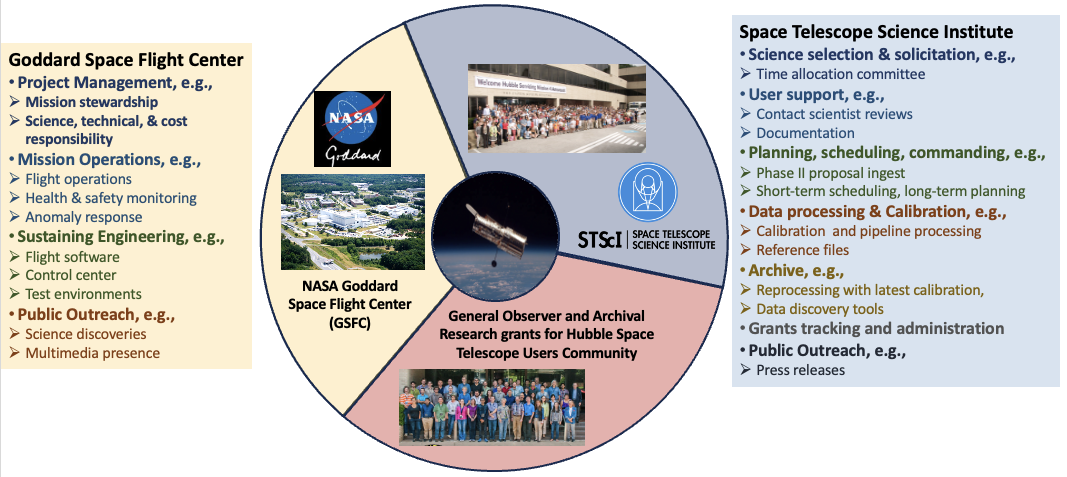
Figure 6: Components of the HST budget
For the last 15 years, the Hubble budget has remained flat, while inflation has decreased spending power by ~40% (Figure 7). STScI and GSFC teams have achieved major efficiencies (e.g., auto-operations) to continue or increase their level of support under an effectively reduced budget and are continuing to explore avenues to streamline and automate operations as much as possible. Due a combination of inflation, flat budgets, and budget risk in FY27 and beyond, grant funding for Hubble research was reduced from a historical $30M/year to $15M/year (Cycles 31 and 32) and $12M in Cycle 33.
No changes in Hubble capabilities related to budget reductions are currently planned. ACS/WFC and WFC3/IR are currently available and fully supported. We anticipate that budget pressures will require reductions in support in future cycles and we will work with the community to identify appropriate priorities to sustain Hubble’s scientific productivity.
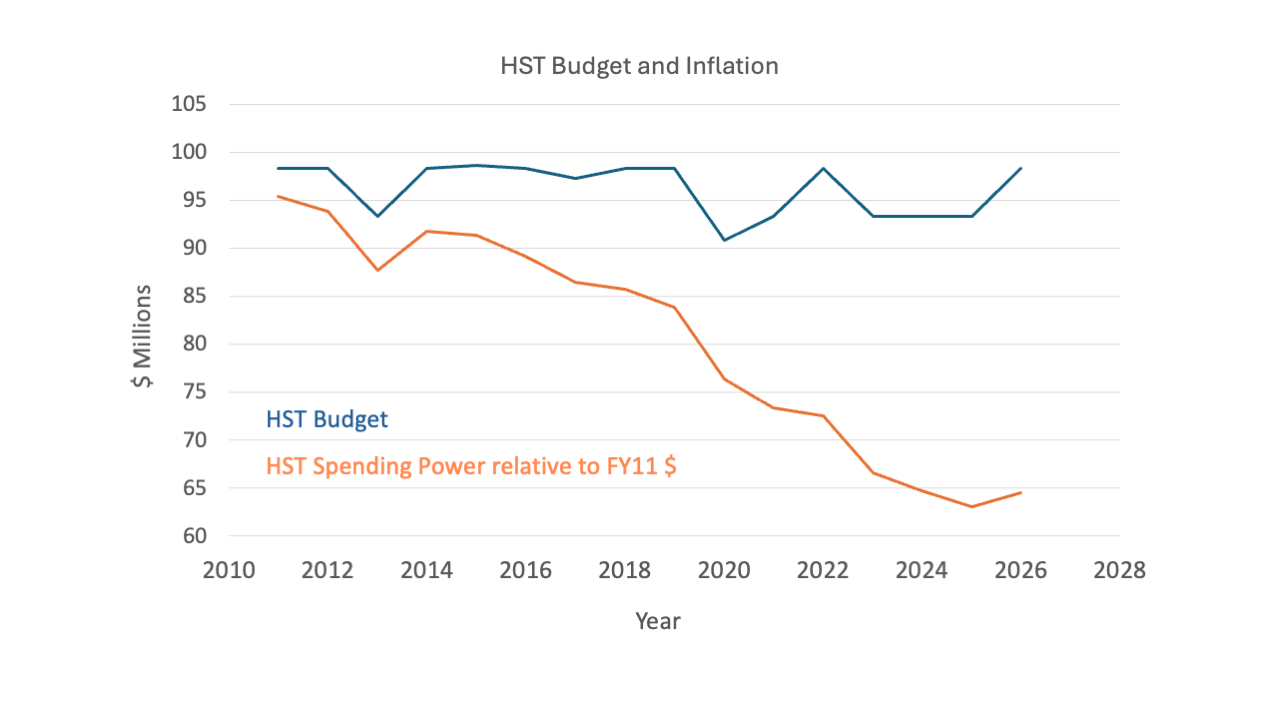
Figure 7: HST budget and spending power relative to FY11 dollars